Seyðisfjörður
Kaldvík holds licences to farm salmon in Seyðisfjörður. Here is what the plan involves and what happens before any farming starts.
Where does the project stand?
In September 2026, Kaldvík received licences for salmon farming in Seyðisfjörður. The operating licence from MAST, the Icelandic Food and Veterinary Authority, allows up to 10,000 tonnes of combined maximum biomass at three sites: Sörlastaðavík, Selstaðavík and Skálanesbót.
The licences are an important milestone after many years of preparation. They do not mean farming starts right away.
Before we decide on construction or timing, the remaining permits and authorisations must be in place. We will also review the technical, environmental, biological and financial basis for the project. That review includes what we have learned from recent biological incidents.
We will not move faster than data, permits and conditions allow. Before each next step, we want a regular, open dialogue with the people of Seyðisfjörður, the municipality, local businesses, environmental organisations and everyone else with a stake in the fjord.
How long has this been in preparation?
We began the application process in Seyðisfjörður in 2014. The project then went through a full environmental impact assessment at Skipulagsstofnun, the National Planning Agency.
Salmon farming is not new to the fjord. Farming took place in Seyðisfjörður from 1986 to 1997, and around 2002 the company Austlax also planned salmon farming there.
Seyðisfjörður is long and deep, with good water exchange. It is outside the protected areas for wild salmon, so salmon farming is permitted in the fjord.
How were the sites chosen?
The sites changed during the environmental impact assessment. Three things guided the final choice: staying outside the protection zone of the Farice submarine cable, keeping the farms as hard to see as possible, and limiting the effect on shipping through the fjord.
A site at Háubakki was dropped after comments that it would be visible from the town. The three remaining sites suit fish farming in their location and currents.
What will the farms look like?
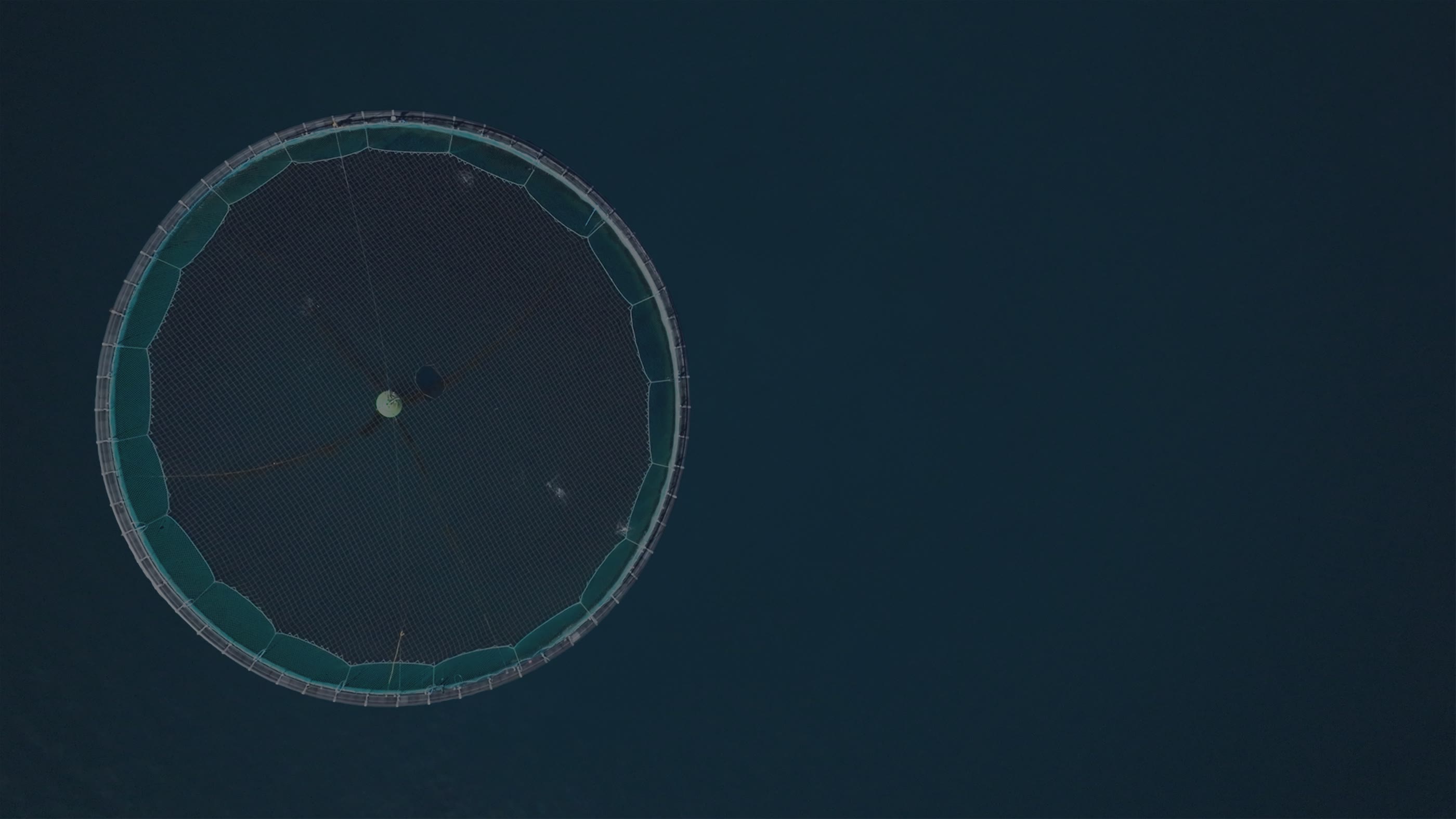
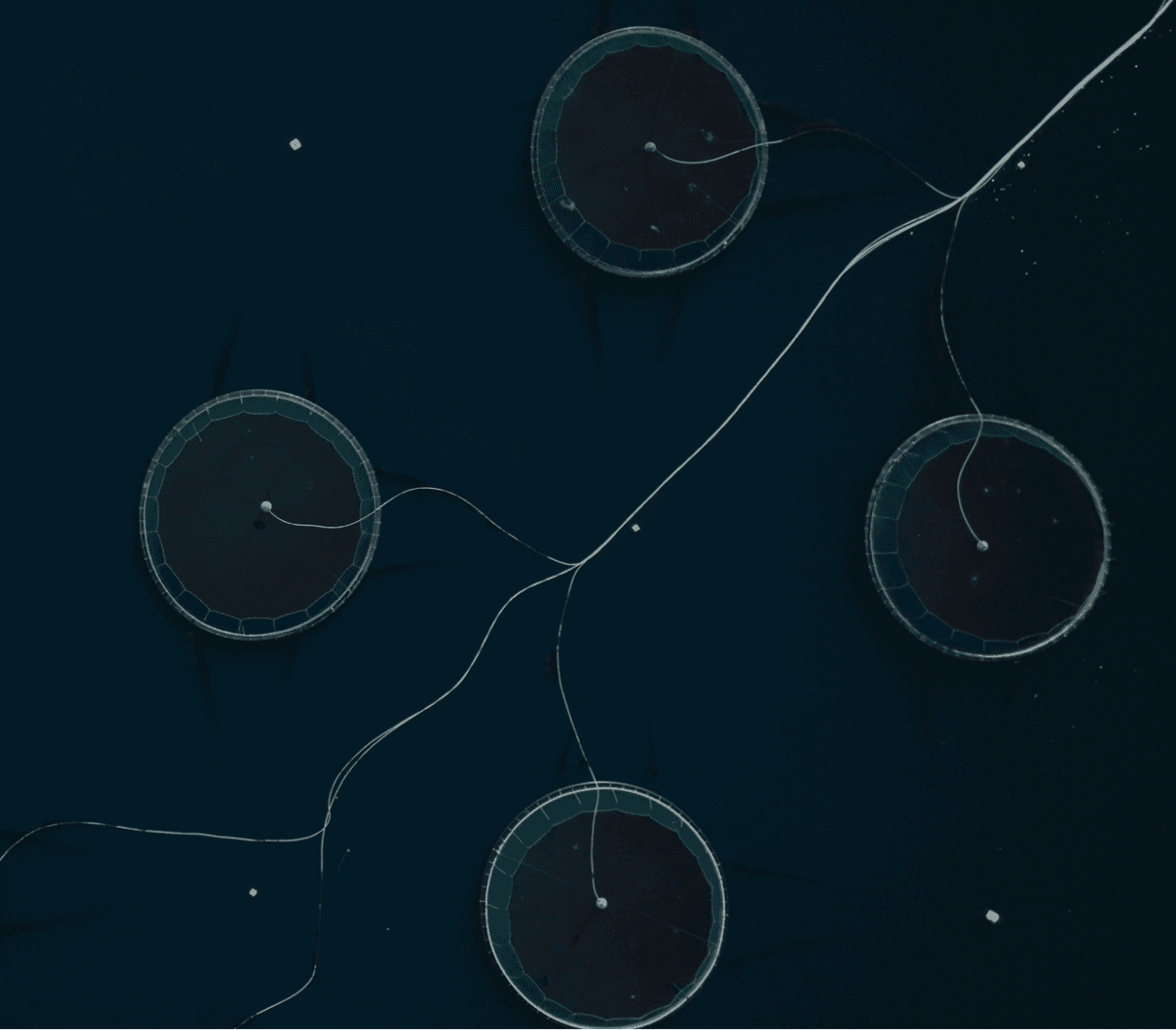
Each site holds one farm: a group of 10 to 12 pens and a feed barge. Each pen is 50 metres across and 160 metres around. One or two sites are in use at any time while the third rests.
The pens are built to withstand waves up to 9 metres high, and icing. All equipment must meet the NS 9415 standard for design and installation. Stocking density will be at most 13 kg of fish per cubic metre.
The pens and feed barges sit low on the water. They can only be seen from well up the hillsides, and the higher you go, the more you see. None of the farms will be visible from the town of Seyðisfjörður.
Will the farms affect shipping?
Seyðisfjörður is an important port for transport and tourism, with the Norræna ferry, cruise ships and other traffic. Our operations must be compatible with safe navigation.
During the application process, we had a navigation safety risk assessment carried out for all the planned sites. Norræna's captains were among those interviewed, and the assessment checked the width of the shipping lanes so that large ships can pass each other. It concluded that the planned sites should not reduce navigation safety.
Samgöngustofa, the Icelandic Transport Authority, reviewed the assessments and Vegagerðin, the Icelandic Road and Coastal Administration, confirmed them. They were then sent to MAST and are part of the basis for the licence. The pens sit outside the shipping sector of the Brimnes lighthouse, and their location, markings and lights are agreed with the port authorities.
We use Norræna a lot for our own exports, so safe and smooth shipping through the fjord matters to us too. We will keep working with the port authorities, Smyril Line and other users of the fjord on the final arrangement.
How is the environmental impact assessed and monitored?
Hafrannsóknastofnun, the Marine and Freshwater Research Institute, sets the carrying capacity of each fjord: how much farming it can take without harming marine life or water quality. The carrying capacity of Seyðisfjörður is 10,000 tonnes. The assessment is reviewed regularly, and farming licences never exceed it.
The institute also assesses how much fertile salmon can be farmed before the risk of farmed fish breeding with wild salmon becomes unacceptable. For Seyðisfjörður, the risk assessment allows 6,500 tonnes of fertile salmon and 3,500 tonnes of sterile salmon. Farming in the fjord will always stay within those limits.
The main impact of sea farming comes from feeding the fish, which puts a load on the seabed under the pens. These effects are considered local and reversible.
We will monitor the fjord to the ISO 12878 standard and follow a monitoring plan approved by Umhverfisstofnun, the Environment Agency of Iceland. The results go to the agency. MAST oversees equipment and fish welfare, and the Environment Agency oversees possible pollution. Inspectors from both visit regularly, and their findings are published on the agencies' websites.
We want to make research, monitoring results and environmental information about the fjord easier to find.
What will the farms mean for the East Fjords?
Farming in Seyðisfjörður would create direct jobs at Kaldvík and indirect jobs with contractors, transport companies and other services in the East Fjords. The work covers farming, boats and work at sea, fish welfare, biology, technology, maintenance, transport, environmental monitoring and management.
The fish would be harvested at Búlandstindur, our harvesting plant in Djúpivogur. They travel there live by wellboat, and go on to market by ship or air.
We want to show what this means in practice, not talk about value in general terms. As the build-out plan takes shape, we will publish figures for current jobs at each site, new direct and indirect jobs, local purchasing, and the effect on harvesting and processing in Djúpivogur.
Salmon farming companies also pay income tax, a resource fee and landing fees, and pay into the aquaculture environmental fund every year.
Common questions about Seyðisfjörður
No. 10,000 tonnes is the most the operating licence allows across all three sites combined. Any build-out will be assessed in steps and must rest on sound biological, environmental, financial and social grounds.
Using the legal routes to appeal is a normal part of the administrative process. Kaldvík will take part in the process constructively, provide information, and respect the outcome of the statutory appeal and administrative processes.
Kaldvík will not start construction unless the authorisations and permits the operation needs are in place. If there are questions about landowners' rights or rights of use, they must be resolved through the legal routes that apply. We believe it is important to respect the rights of everyone involved.
Avalanche risk is one of the issues that must be taken very seriously in Seyðisfjörður. It has been part of the project's assessment and licensing process, and we will follow the conditions the authorities set.
If further studies or an independent expert assessment are needed before operations start, we think they should be done.
ScaleAQ has expertise in equipment and structures for fish farming, and its assessment was done in that context. We understand the question about independence when it comes to natural hazards.
If further assessment by experts independent of the equipment maker is needed, we think it should be done before final decisions on construction are made.
Conditions were set during planning that take account of safety and natural hazards, among other things. Kaldvík will set the final layout of the farms in line with those conditions. The aim is to reduce risk as far as possible.
Land-based and sea-based farming are very different systems with different infrastructure needs. Farming 10,000 tonnes on land is a large industrial operation that needs a lot of land, water, electricity and specialised buildings.
The first step would be a feasibility study covering the site, buildings, water supply, power, wastewater, cost and environmental impact. We are open to exploring with the municipality whether existing industrial land or buildings could play a part in future development.
The protection zone around the Farice cable extends 463 metres on each side of it. All farm equipment will sit outside that zone, within the designated farming areas, so the planned farming will not affect the cable.
The Aquaculture Act is the legal framework for the industry. MAST administers it and checks that it is followed. Fish farming also falls under the Act on Hygiene and Pollution Prevention, administered by the Environment Agency of Iceland.
Other rules include Regulation no. 540/2020 on aquaculture, Regulation no. 550/2018 on emissions from business operations and pollution control, and Act no. 60/2006 on protection against fish diseases.
Questions about Seyðisfjörður?